Brain Retraining For PTSD, Trauma & Nervous System Recovery
Understanding Trauma Patterns in the Brain
Trauma can create deeply ingrained patterns in the brain that influence how you feel, respond, and perceive the world around you.
These patterns aren't something you consciously choose — they tend to form quietly over time, as your brain does what it's designed to do… protect you.
For many people, this means the brain becomes used to staying on alert, constantly scanning for danger, even when there isn't any immediate threat.
You might notice it in small ways…
finding it hard to fully relax or feeling like something just isn't quite right, even when everything around you seems okay.
Because of this, responses can feel fast, automatic, and sometimes overwhelming — often happening before you've had a chance to fully process what's going on.
Why PTSD Can Feel Ongoing
Even when the original event is in the past, the brain and nervous system don't always register that it's over.
It can feel like being stuck in a loop — where your body reacts first, and your thoughts follow.
At times, it can feel confusing…
like you know you're safe, but your body doesn't seem to agree.

You might notice patterns such as:
- Heightened anxiety or hypervigilance
- Emotional overwhelm
- Difficulty relaxing or switching off
- Feeling on edge, even in safe environments
For many, it's the body that speaks first — through sensation, emotion, or a sudden sense of urgency — before the mind has a chance to make sense of it.
Moments where your heart races, your chest tightens, or a wave of emotion comes out of nowhere.
This isn't a failure, and it isn't a lack of control.
It's the brain doing exactly what it learned to do to keep you safe.
How Brain Retraining Supports Trauma Recovery
Brain retraining works with the brain's natural ability to adapt and change, known as neuroplasticity.
With consistent, structured input over time, the brain can begin to form new patterns — ones that are not solely driven by protection.
This may help to:
- Reduce emotional reactivity
- Build a stronger sense of safety within the body
- Improve emotional regulation
- Ease the constant feeling of being on high alert

At first, the changes can be subtle.
Maybe you notice a moment where you feel slightly calmer than usual…
or a situation that would normally trigger you doesn't feel quite as intense.
Over time, those small shifts can accumulate.
Instead of constantly scanning for danger, the brain may start to naturally recognise moments of safety.
It's not forced. It's not rushed.
It happens gradually, through repetition and gentle reinforcement.
A Gentle, Non-Intrusive Approach
One important thing to understand is that brain retraining doesn't require you to relive past experiences.
For many people, that matters.
Especially if the idea of "going back there" feels overwhelming or exhausting.
Instead, it works in the background — supporting the brain in a safe, passive, and manageable way.
Blissiree uses low-volume Positive Auditory Stimuli designed to engage the unconscious brain, gently guiding the nervous system towards a more balanced state over time.
There's nothing you need to push or force.
Even on days when you feel tired, flat, or not quite yourself… it still works in the background.
You simply press play, rest, and let your brain do the work.
Real Stories of PTSD and Recovery
The Positive Auditory Stimuli method has been featured in documentaries following people living with trauma and PTSD.
These are real individuals, sharing real experiences — including challenges, uncertainties, and the changes they noticed along the way.
You may recognise parts of your own experience in their stories.
For many, it offers a new perspective on what recovery can look like.
Life On The Blue Line
Police Officers' Journey with Complex PTSD
Three police officers share their lived experience of complex PTSD, and what began to shift for them over time.
Blue Rain – PTSD: The Silent Suffering
Four individuals living with PTSD share their stories of struggle, strength, and transformation.
Research and Evidence Supporting the Method
The Positive Auditory Stimuli approach has been studied through observational research involving people who completed the Emotional Empowerment Program.
In a study of 535 participants, results showed measurable improvements in emotional wellbeing using recognised psychometric tools.
Participants reported improvements in:
- Self-esteem
- Symptoms of depression
- Anxiety
- Stress
- Worry
These findings were published in the European Journal of Medical and Health Sciences.

A second publication looked into the use of Positive Auditory Stimuli for Post-Traumatic Stress Disorder (PTSD) among police officers, exploring its potential to support those working in high-stress environments.
Read the full study eu-opensci.org
Try It for Yourself
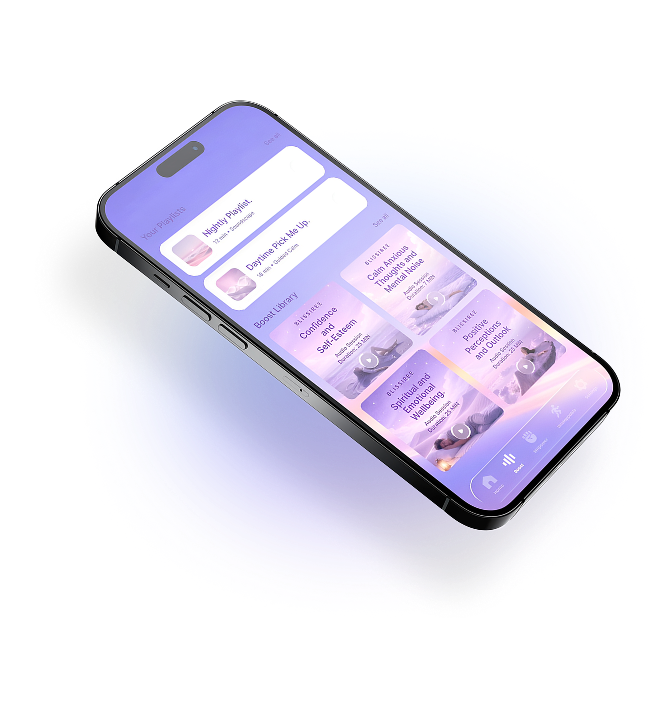
Try the Blissiree 30-Minute Brain Reset and explore the Boost Library with over 200 brain retraining audios.
You rest. Your brain does the work.